“It is apparent from the evidence that vehicle grilles come in an array of different shapes and sizes. The purpose of a vehicle grille is to let air flow into the engine bay to prevent overheating.”
This is a quote from very recent decision of a delegate of the Australian trade marks registrar (Toyota Jidosha Kanushiki Kaisha [2022] ATMO 86 (May 2022)), in which Lexus’ highly distinctive L-shape “spindle grill” was rejected for trade mark registration.
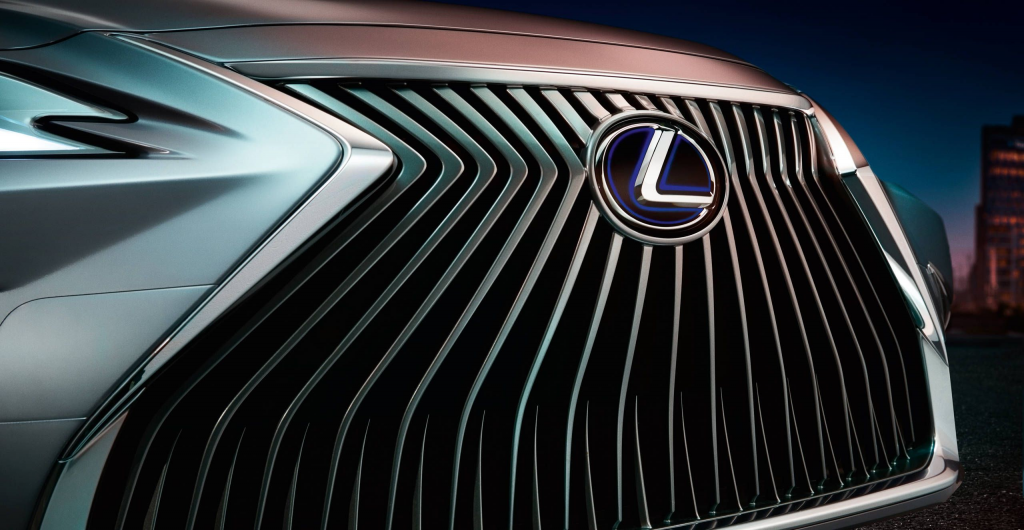
In places like Australia where Lexus has a significant market share, this grill is commonly seen on roads – an ‘aggressive’ and ‘visually striking’ feature to the front of the car.
Below is an image – essentially, how it was described – from the Australian trade mark application:
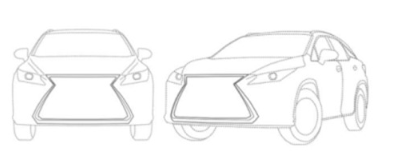
It is interesting to note that the “lightning bolt” vertical spines or spindles were removed for the purposes of the application. The hearing officer observed:
“The Claimed Mark is a trapezoid shape which is pinched inwards on both sides (approximately 1/3 of the way from the top of the shape) and is positioned in the central part of the front of a vehicle. From the evidence before me, the Claimed Mark is the shape of the grille on the front of the Applicant’s automobiles and is often referred to as the ‘spindle grille’.”
Missing also from this summary is the fact that the shape alludes to the letter “L” in “Lexus” (and more on this below).
As many shape marks applications do in Australia, the major issue was the failure to show use as a trade mark. The risk for any shape mark applicant is that is has not sufficiently promoted the shape as a trade mark in its own right, and any distinctiveness that the shape has acquired is attributable to its use in combination with other brands owned by the applicant. From the decision:
“The Applicant submits that the Claimed Mark has been used as a badge of origin and draws my attention to the fact that it is consistently shown throughout the Applicant’s promotion of its vehicles in close-up or as a salient feature on the front of the vehicles. I agree that the Applicant’s advertising does consistently contain images of vehicles which have the spindle grille. However, it is not clear to me that consumers upon seeing this type of advertising material would perceive the Claimed Mark as possessing the character of a trade mark. The consumer is likely to view the Claimed Mark as merely an illustration or representation of the Designated Goods or a feature of those goods, rather than any assertion of a proprietary right… the evidence makes it clear that the Claimed Mark is always used in combination with a stylised ‘L’ device, or in close proximity to the word ‘Lexus’. As such, it would be logical for members of the public to draw an association between the Applicant and the spindle grille. However, this does not equate to consumers attributing trade mark significance to the shape itself.“
I’m obviously not across all of the evidence filed in this matter, as only some of it was quoted by the hearing officer. But it seems to me that the best way of communicating that a shape mark like this is proprietary to a car manufacturer is to use terminology in marketing collateral to plainly, unequivocally describe the feature as a trade mark. I think if a lot more attention had been paid to the fact that the grill was a mirrored capital “L”, and that the cooling functionality of the grill was not assisted by the effort to project that very important “L” to consumers (granted, something a car manufacturer is going to be understandably reluctant to say on a public record), there might have been better prospects of success.
Missing also was survey evidence – how the market apprehends the grill as a Lexus trade mark. Survey evidence in trade mark hearings before a delegate of the registrar in Australia is always a bit hit-and-miss, but when it isn’t included, hearing officers can be quick to pick out that omission (although, not in this decision). Subjectively, I’d guess Australian consumers would be onto the importance of the grill as a badge of origin.
Finally, the hearing officer has quoted from Societe Des Produits Nestle SA v Unilever plc , a UK case to do with shape trade marks:
“There is a bit of sleight of hand going on here and in other cases of this sort. The trick works like this. The manufacturer sells and advertises his product widely and under a well-known trade mark. After some while the product appearance becomes well-known. He then says the appearance alone will serve as a trade mark, even though he himself never relied on the appearance alone to designate origin and would not dare to do so. He then gets registration of the shape alone.”
Delegates of the trade mark registrar have recently repeatedly cited this paragraph in shape trade mark decisions, this being the fourth occasion in the past two years, and any vehicle manufacturer seeking to register a shape in Australia should be prepared for it.